Category Archives: Film Heritage and History

My work for preserving India’s film heritage and writings about various aspects of Indian film history

At National Film Archive, 14,900 celluloid reels ‘stored’ in gunny bags

These reels are “not in runnable condition” now, states the report — in other words, they cannot even be put through a film projector. Of the 17,595 film reels found stored in gunny bags in November 2015, when the inspection that led to this report was conducted, only 2,645 were found to be in “runnable condition
ATIKH RASHID

For most of the promo, their eyes are covered with strips of film as they talk about the immortality of cinema, and the need to preserve celluloid. The message delivered by the actors is clear — so is the irony behind the scene.

This three-minute film was produced by the National Film Archive of India two years ago to promote the National Film Heritage Mission, a Rs 597-crore preservation, conservation and restoration programme launched by the government in 2014. But in reality, the blindfolds could well have been on the eyes of the NFAI itself.

An internal “condition report”, accessed by The Indian Express and replies received to requests made under the Right to Information (RTI) Act, details the mess:

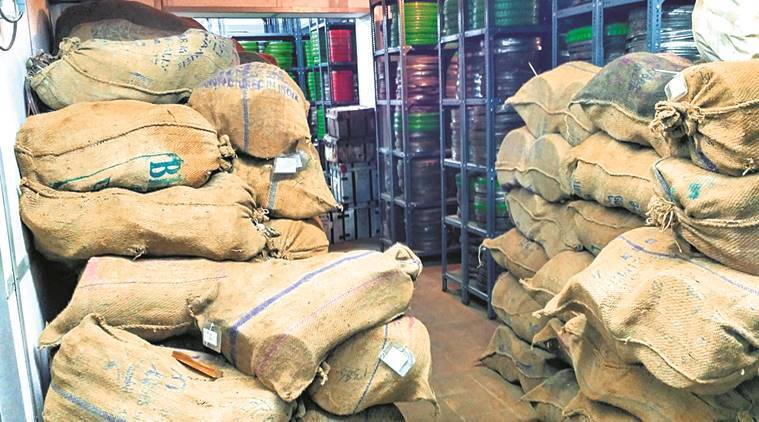
More than 1,100 films, contained in 14,950 reels, including rare and precious pieces of Indian and international cinema, are rotting inside 1,202 gunny bags on the second and third floors of a building inside the NFAI’s Pune campus.

According to Magdum, these films were received from the “Railway’s lost property offices”, and were of poor quality and condition. (Source: Express photo)
These reels are “not in runnable condition” now, states the report — in other words, they cannot even be put through a film projector.

Of the 17,595 film reels found stored in gunny bags in November 2015, when the inspection that led to this report was conducted, only 2,645 were found to be in “runnable condition”. But even these remained in gunny bags for several months more before being moved to customised racks under controlled atmospheres.

That’s not all.

On February 21 and 22, 2016, records show, these reels in gunny bags were shifted to a private single-storey warehouse in Chakan, about 40 km from the NFAI campus in Kothrud, without temperature control, little ventilation and leaking roofs. This was done just days before experts from India and abroad, and senior officials of the Ministry of Information & Broadcasting, visited the NFAI for a workshop on film preservation and restoration from February 26 that year.

According to the documents, NFAI’s administrative officer D K Sharma signed an “Octroi Certificate” to ensure that the “consignment” was not charged during transfer — the certificate valued the consignment at Rs 1 lakh. The bags were transported back to the NFAI campus two weeks after the workshop ended on March 6, records show.

The bags were transported back to the NFAI campus two weeks after the workshop ended on March 6, records show. (Source: Express photo)
“The level of neglect is such that although the reels have been with NFAI for several years, there is no proper record of the titles of these films. There is a possibility that rare ‘gems’ of Indian and world cinema could be lying there, possibly ruined by now,” said an NFAI official, who spoke on the condition of anonymity.

Film Archive, NFAI, National Film Archive of India, cinema Archive, Indian films, Indian movies, Reel preservation,
According to the official, these film reels include documentaries produced by the Films Division, copies deposited with the Central Board of Film Certification (CBFC) by producers and handed over to NFAI for preservation, orphaned reels of Indian and foreign films found in the parcel offices of Railways, and films seized by the Customs Department.

The NFAI was set up in 1964 as a media unit of the I&B Ministry to acquire and preserve cinematic heritage, including film and non-film material.

The NFAI was set up in 1964 as a media unit of the I&B Ministry to acquire and preserve cinematic heritage, including film and non-film material. (Source: Express photo)
When contacted, Prakash Magdum, director, NFAI, said, “These film reels were assessed, segregated and securely packed after rigorous in-house assessment activity of nearly three months in 2015. The titles thus have been identified, with multiple copies, in some cases almost 10 to 12 copies of a film. The material in good condition has been identified and put in plastic cans and stored. The damaged/decomposed material is packed in gunny bags for further necessary action such as disposing of decomposed content, which may otherwise affect the good material. Even such decomposed material is also housed in temperature-controlled conditions.”
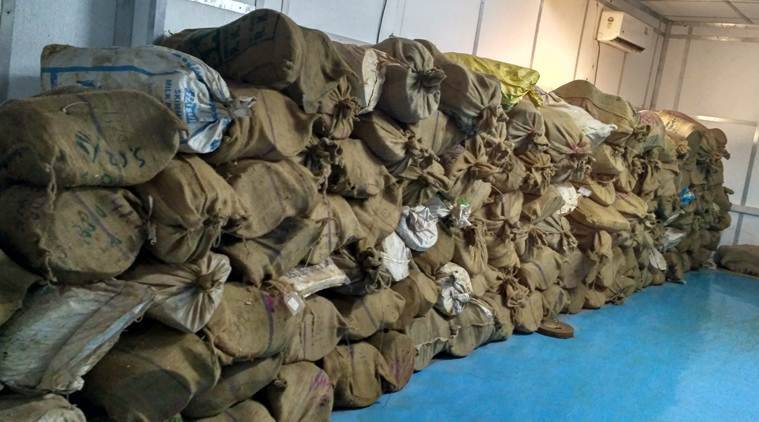
According to Magdum, these films were received from the “Railway’s lost property offices”, and were of poor quality and condition.

However, while replying to an RTI query from The Indian Express in September 2016, the NFAI had said that it had received only 3,000 reels containing 308 film titles, including multiple copies, in the form of lost property from the Railways.

Documents reviewed by The Indian Express under RTI also show that the High Level Committee (HLC) on the National Film Heritage Mission, headed by the Secretary, I&B Ministry, held five meetings since June 2015 — but did not discuss the films in gunny bags at the NFAI even once.

The 10-member committee comprises the heads of the Film and Television Institute of India and the Satyajit Ray Film and Television Institute, experts such as filmmakers Jahnu Barua and Rajiv Mehrotra, and senior government officials.

Speaking to The Indian Express, Barua said, “This matter never came up for discussion in the meetings so far. I’m not aware of these films. But I hope that they will be preserved as part of the heritage mission.”

It’s not just films — decaying in piles of scrap are posters, film scripts, stills, song booklets, pamphlets, and press clippings deposited with NFAI.

According to the internal report, the gunny bags have been dumped in the Service Block in phase II of the NFAI premises, which also houses over 1 lakh film stills, thousands of wall posters, nearly 2 lakh press clippings, thousands of pamphlets, film scripts and other ancillary material. Most of these were received from various libraries and individual collectors.

The inspection found that most of the paper material was tied in bundles, with layers of dust gathered over the years. Many were decomposed or got brittle due to years of neglect. Most of the press clippings were rendered illegible and had become extremely fragile.

Film Archive, NFAI, National Film Archive of India, cinema Archive, Indian films, Indian movies, Reel preservation,
Apart from being a testimony to India’s cinematic past, the film publicity material and archival clippings came to the NFAI at a cost — Rs 100 to Rs 1,000 per item depending on archival value. Documents show that in the last 14 months alone, the NFAI spent Rs 28 lakh on buying film publicity material from individual collectors.

Magdum said the NFAI started the practice of storing publicity material in acid-free boxes and folders in 2015 but did not provide specific numbers.

“The non-filmic material has not decomposed due to any neglect on the part of the organisation but every care has been taken to ensure prolonging of its life. Generally, the material becomes brittle or decomposition happens because of the age of the material. Many a times, the material received is in poor condition. However, NFAI has undertaken digitisation of this content in order to preserve the same in other medium and ensure its access to the general public and researchers at large through various modes,” said Magdum.

Asked about the reels being shifted to a warehouse last year, Magdum said the material was shifted as infrastructural work was being undertaken at the NFAI premises.

“In order to keep this material in temperature-controlled environment, the necessary infrastructure had to be created at Phase II premises. As NFAI initiated the process in August-September 2015, of installation of thermocol insulation and installation of air-conditioning and de-humidifiers equipment as a part of creation of infrastructure, it was necessary to move out the content temporarily to some other location, as NFAI did not have sufficient storage space. Once the infrastructure was created, the material was immediately brought back to NFAI to keep it in temperature-controlled environment,” he said.

The director did not elaborate on why the films were moved in February-March 2016 but said that “such a practice of keeping the material outside NFAI premises for short-term storage was prevalent in the past, too”.

From reel to rail: How celluloid prints of Bollywood movies end up in Indian Railways’ lost property offices

NFAI officials say celluloid prints were often dumped by producers and distributors after they lose all their financial value. After spending months, or years, in lost property offices of Indian Railways many of the prints end up at the National Film Archive of India.

Among the films that have made their way to Natinal Film Archive in this manner include national award winners such as Chandni Bar and even blockbusters such as Dilwale Dulhaniya Le Jayenge and Munnabhai MBBS.

ATIKH RASHID

NOT all films have happy endings. A few have endings sadder than others. An RTI query by The Sunday Express shows that as many as 308 films contained in over 3,000 reels have made their way to the National Film Archives of India (NFAI) over the years, after spending long durations in the lost property offices of Indian Railways across the country.

NFAI officials say these are film reels that have been dumped by producers and distributors as these no longer hold any financial value for them. The films include national award winners such as Chandni Bar and even blockbusters such as Dilwale Dulhaniya Le Jayenge and Munnabhai MBBS.

Although most of the reels the NFAI has received are of Hindi films, there are Malayalam, Marathi, English, Telugu, Kannada and Russian films as well. These are feature films and documentary films, and newsreels broadcast by Doordarshan in the 1980s.

Says NFAI Director Prakash Magdum, “They (the producers and distributors) book a parcel with the film reels to addresses that don’t exist, or no one comes to collect it at the office. These lie with the parcel office and then finally end up in the Lost Property Department of Railways, where they lie for weeks or months.”

In the old days, when films used to be shot on nitrate, filmmakers would sell the reels that were returned to them after their theatrical run was over to dealers, who would extract silver from them. From the 1990s, most of the films started getting shot in acetate and polyester, which don’t yield the producers any significant financial remuneration. At most the film can be melted and used in bangle manufacturing. Since 2011-2012, filmmaking and distribution has gone almost entirely digital, making physical prints redundant.

With space at a premium, the major reason producers want to get rid of the reels is that they don’t have place to store them.

R Y Joshi, the Deputy Chief Commercial Officer with Western Railway, from where a majority of the reels have come to the NFAI, says, “I remember years ago there was a circular from the Railway Board concerning the unclaimed film reels. It said that if that we have any unclaimed film reels, we should get in touch with the NFAI as they have some use for them. So we follow that instruction.”

The RTI reply shows that the NFAI has received reels from Mumbai (Western Railway), Visakhapatnam, Thiruvananthapuram, Bengaluru and Gaya. The NFAI preserves these films for archival purposes.

Director Magdum says that each and every film shot on celluloid is important to them from archival point of view. “Now, since the digital medium has taken over and almost 100 per cent industry output is digital, every film shot on celluloid needs to be rescued and each holds historical and cultural importance.” Just a few days ago, he was informed about “four-odd boxes” of reels lying with the lost property office in Mumbai, he says.

Some of the film’s whose reels have made it to the NFAI from lost property offices include Shyam Bengal’s Mammo (1994), Amitabh Bachchan’s debut film Saat Hindustani (1969), Rakeysh Omprakash Mehra’s Aks (2001), Sudhir Mishra’s Chameli (2004), Mithun Chakraborty’s hit Disco Dancer (1982), Martin Scorcese’s Gangs of New York (2002), and Anant Balani’s Joggers’ Park, apart from Dilwale Dulhaniya Le Jayenge (1995), Madhur Bhandarkar’s Chandni Bar (2001), and Rajkumar Hirani’s Munnabhai MBBS (2003).

Reels of 11 Russian films have come to the NFAI, including that of the 1990 comedies Deja Vu and Pasport.

The Cloud Capped Star!

Meet Parvati Suryavanshi aka Parubai, the waste-picker who started picking roles in student projects at India’s best film school.

eye-759
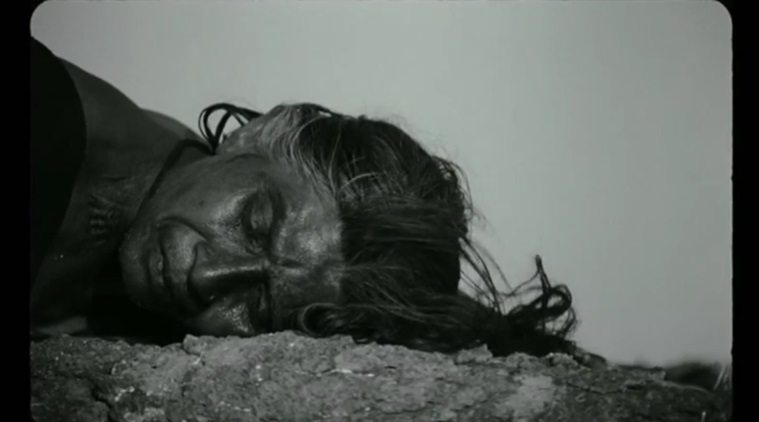
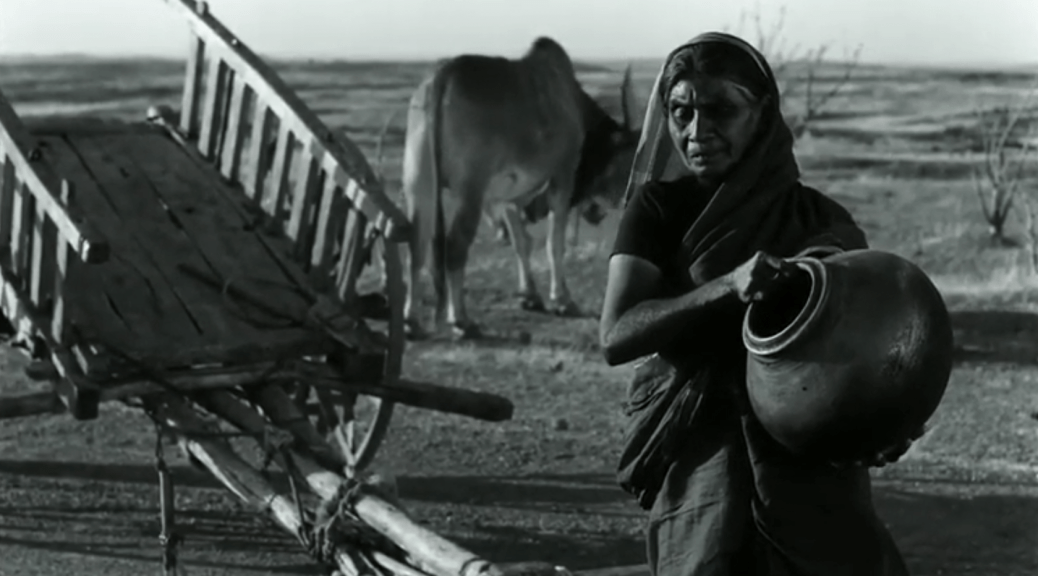
A still from Kamakshi (directed by Satindar Singh Bedi) in which Parubai plays the titular role. The film was screened at Berlinale 2015. 

If she were versed in actorspeak, she would tell you that the story of the lead character she plays in the short film Kamakshi could well be her life’s narrative. She would have drawn parallels between her character who scrounges for water to sell to the needy and her own youth, during the 1972 famine, when she left home to work as a labourer on well construction sites.

But you hear nothing of this when you meet the waste-picker pottering about the sleepy sprawling campus of Pune’s Film and Television Institute of India (FTII). One thing she takes pride in is that she hasn’t stolen a single piece of metal from the campus in the three decades she’s been there.

Along with picking used papers, glass, plastic to be sold as scrap, Parubai aka Parvati Limbaji Suryavanshi, 78, started picking up roles in student projects on campus.

Her IMDb page describes her as “an actress known for Kamakshi (2015) and Makara (2013)”. Kamakshi, the diploma film of Satindar Singh Bedi draws from the mythological figure of the goddess of compassion. It made good noise at national and international festivals: competed at Berlinale 2015, was part of Indian Panorama at International Film Festival of India (IFFI) and bagged four awards at Mumbai International Film Festival (MIFF). Parubai plays the titular role of the old, lonely yet determined woman obsessed with obtaining and providing water in the drought-hit terrain. Prantik Basu-directed Makara was shown at 2013 Rome Film Festival.

She has worked in over 20 student films till date. “More, but not less,” she says in Marathi, the only language she is fluent in. With the students, she speaks in broken Hindi.

IMG_20180527_113701
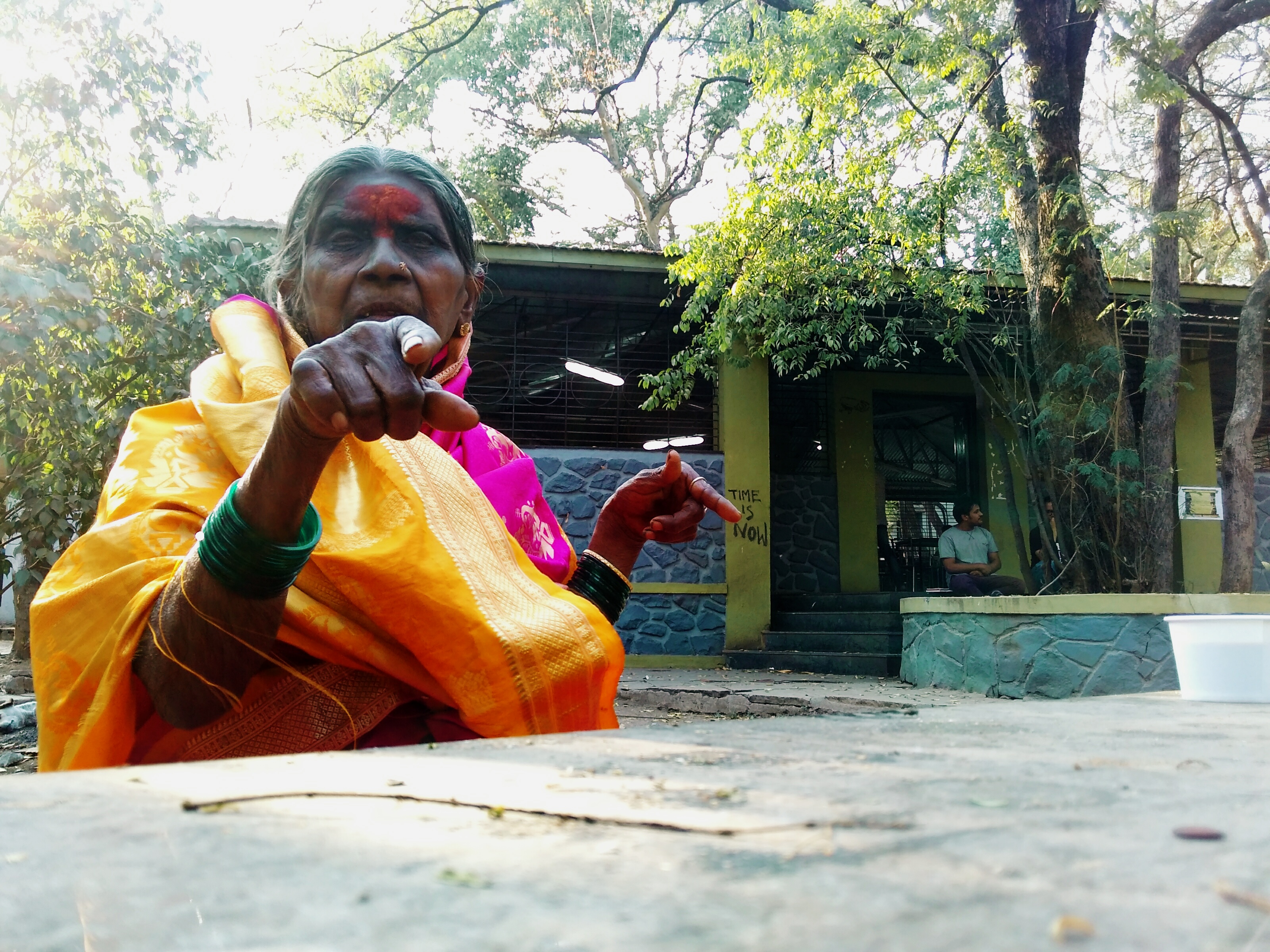
Parubai can be spotted at FTII Canteen on most afternoons. (Photo Credit: Atikh Rashid)

The landless labourer in water-scarce Solapur didn’t have it easy even before the 1972 famine. “My husband and I worked as daily wagers in farms. The drought took away all work. There was no food. Our cows and calves died, we had no time for them as we struggled to feed ourselves,” she says.

The family climbed on a truck when a contractor came looking for cheap labour. Taken to Gujarat, husband and wife spent days breaking stones for road construction, digging wells, harvesting crops. Nights were spent in temporary shelters or in the open.

“My husband was reluctant to take me along, but I insisted. We went wherever work took us: Gangthadi, Vapi, Navsari,” she says. “My husband would lift big stones and put them on my head to carry. Bigger stones meant more money.”

“I don’t understand cinema at all,” she says. For her, acting is doing what’s told once the director shouts: ACTION!

Of all the films she has worked in, her favourite is Kamakshi, although she grumbles that she looks terrible in it — “almost like a witch”. The film demanded great amount of hard work from the team, especially the lead.

“That shoot really tired me out. The sequences were really difficult and tricky. I had to climb down the well, sleep in water and even chew stones. All this in one sari,” she says. She had to wear the same sari throughout the film. “I thought I would contract pneumonia. But you have to suffer. That’s how it is during a film shoot,” she adds.

Potachi khalgi bharnyasathi aamhi kaam karto (I do this work to feed myself), since there’s no one to support me. Even today, I don’t have electricity in my house,” she says.

Walking 4 km to FTII is part of her daily routine. Even when there’s no work, she leaves for FTII in the afternoon and spends her evenings on the campus. She says the students mean more to her than her own son and grandsons. Pointing at her sari, with great pride, she says a Bangladeshi student’s mother brought it all the way from Dhaka for her.

While some say she is an ideal actor, does what’s told, others feel she can only fit into roles with limited dialogues. Some think she’s a natural, others feel she overacts. Despite that, roles continue to land in her kitty. She’s just finished shooting for a commercial film in Pune and Latur.

IMG_20180215_154437
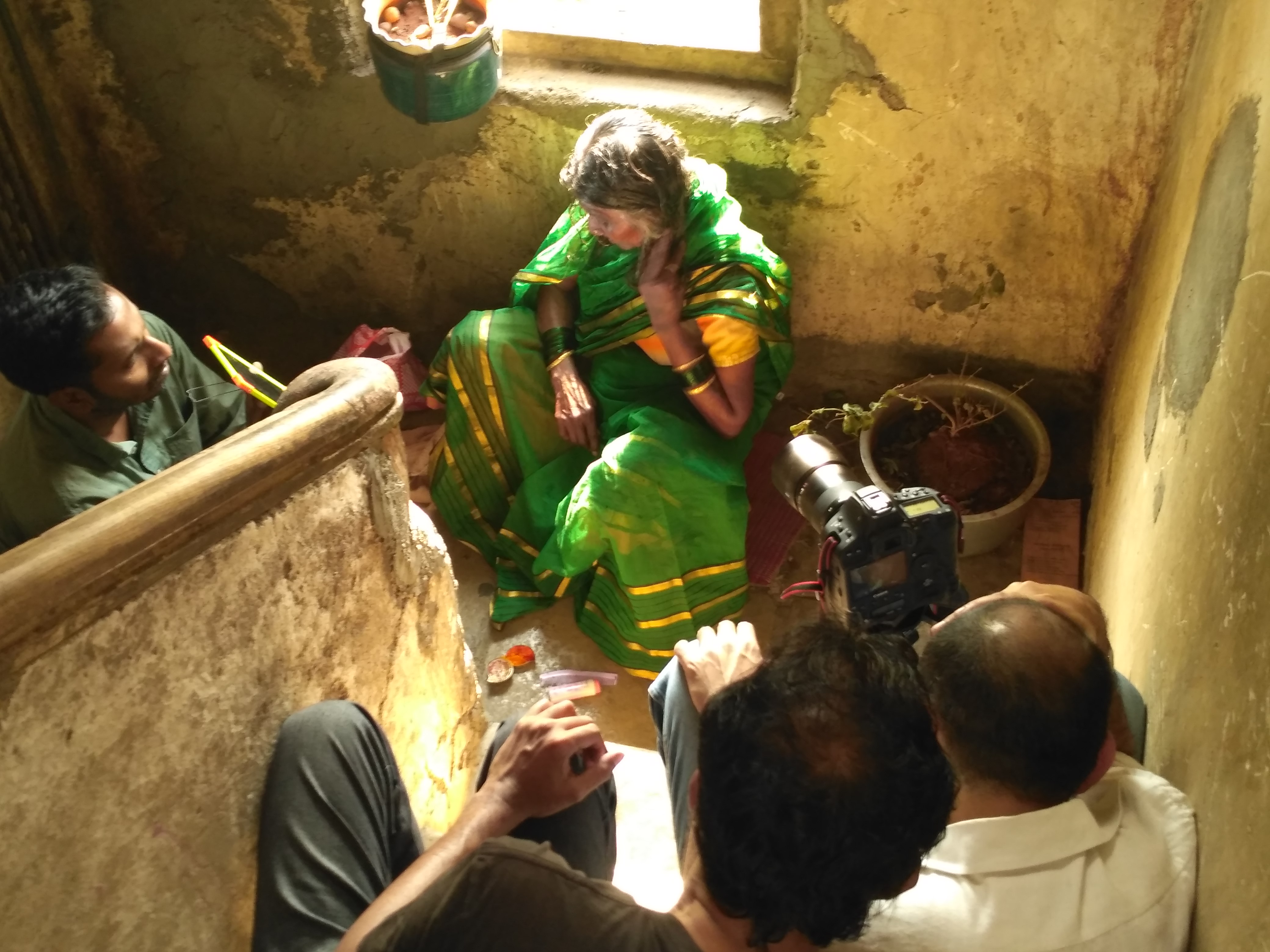
During an academic exercise at FTII. (Photo Credit: Atikh Rashid)

Makara-director Basu says, “I was looking for good storytellers. She fit the bill. Her scenes were written from her own experiences and anecdotes. She has a peculiar way of talking which I find very interesting as a filmmaker. Also, having been associated with film production process for so long she’s quite adaptable to shooting conditions and physical challenges.”

She lost her husband a decade ago. One of her two sons (she had lost three more to the 1971 famine) died a few years ago. The surviving one, she says, is a drunkard whose wife and sons left him and that he feeds off his mother. “It’s here (FTII) I find some solace. I’m alive only because of these kids (students),” she says.

Over the last four years, she has developed cataract which hinders waste-picking. For acting gigs, the students pay her a fee — often her sole source of income. She badgers students for cash when there are no assignments.

Until 2009, when she earned Rs 11,000 for a diploma film, she stayed in a two-tin-sheet shanty. Her house now is located in Janata Vasahat slum on the steep slope of the Parvati Hill. She’s among the first few settlers there. Parubai and her son live in the rear, hidden from public view. The son sold off the copper utensils, the meagre furniture, the tin sheets off the roof. “I had built this hut from money I got for that film. At least, I have a proper place to sleep now,” she says.

Screenshot_20200205-011257
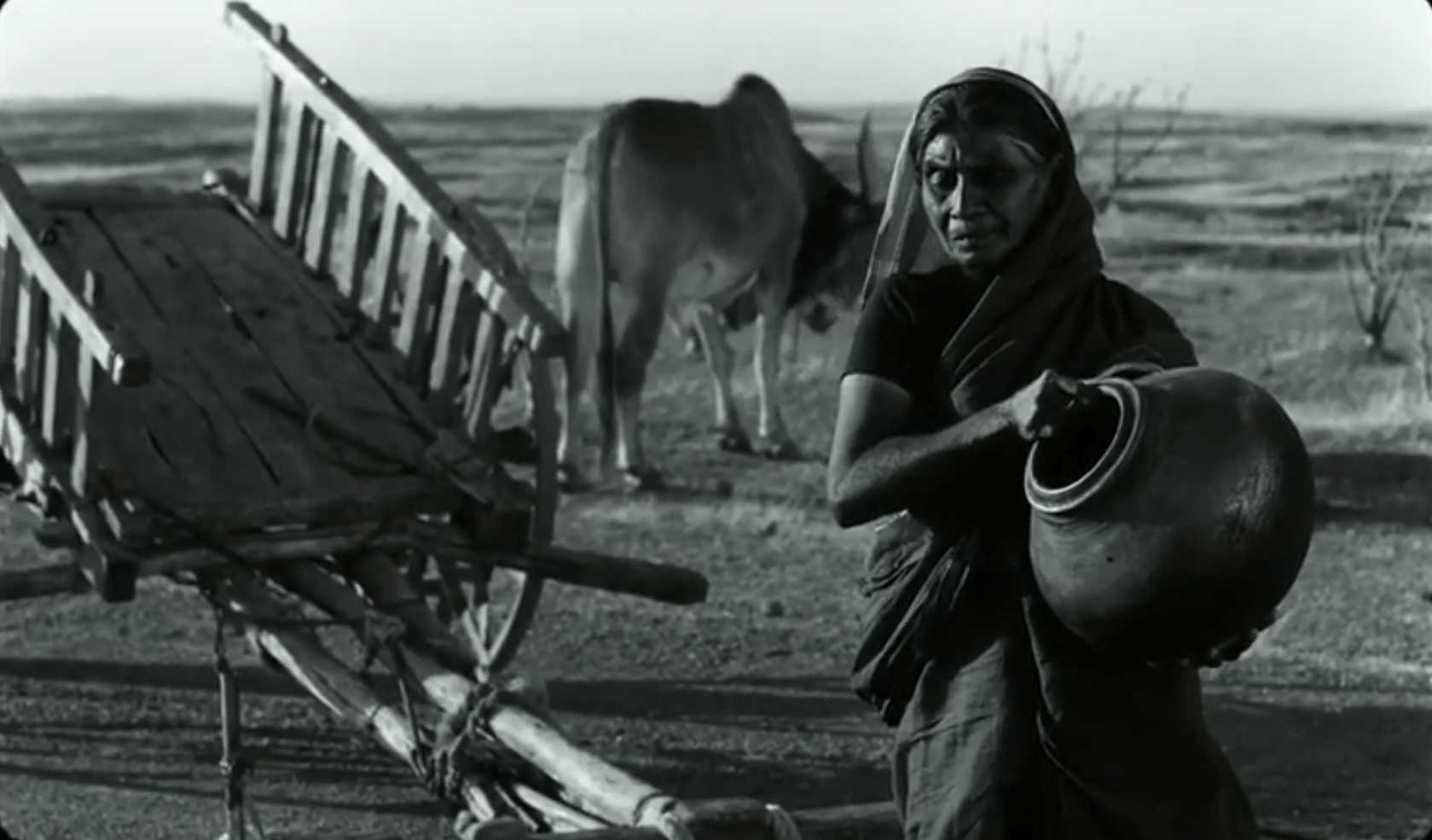
Another still from Kamakshi (2015)

She reminisces about her time in Gujarat where the husband-wife earned about Rs 10 a day but had to flee after the muqaddam (expediter) started punishing them for helping a co-worker whose family fled after taking an advance. Parubai left with her husband and children, too, and roamed for days, on foot, in buses and trains, until they reached Pune. She did odd jobs until 1982-83, when she joined the Kagad Kach Patra Kashtakari Panchayat as a waste picker. A couple of years later, she got a waste-picking job at FTII and with that Parubai made her modest entry into the world of cinema.